Tuesday, February 26


Its back plate, with its brushed metallic-blue design, is nearly identical to that of the Galaxy. Both the front and the back are fingerprint magnets, though, so keep that in mind.
With a 0.33-inch profile, the phone is incredibly thin. It measures 6.3 inches tall and 3.25 inches wide, and feels relatively lightweight in the hand -- for a phablet, anyway.
Sporting a whopping 5.7-inch HD display, it easily surpasses the Note 2 and the Optimus G in screen real estate. The screen has a 1,280x720-pixel resolution, and unfortunately, it doesn't come with a stylus. Not everyone needs to use one, but with a phone like this, it should at least be an option.

Features

Powering the Grand Memo is a 3,200mAh battery and a 1.5GHz Snapdragon 800 quad-core processor. During my brief time with it, I didn't experience any particular lag, and it handled simple tasks like opening up Chrome and launching the camera easily.
It features Android 4.1.2 Jelly Bean, but beware -- ZTE has slathered its own interface on top of it. Personally, I was always fond of how ZTE left its Android OS untouched for the most part. But from the notification bar to the odd Rubik's cube animation for the app drawer, you won't get away from the ZTE's UI in this handset.
Other features include 16GB of memory, Dolby Digital technology, 1GB of RAM, and a 1-megapixel front-facing camera. On the rear is a 13-megapixel camera that's capable of recording 1080p video and has photo features like geotagging and time lapse.
 To make one-handed usage easier, the Memo can situate its keyboard and number pad slightly more to the left or right (depending on what your dominant hand is), so you can type with one hand.

With its quad-core CPU and 13-megapixel camera, it flaunts respectable specs. Currently, there are no plans yet to bring the Grand Memo to the U.S. Given ZTE's history of manufacturing competitively priced phones here, it'd be interesting to see if the Memo were to launch on our shore as the phablet for those on a budget. But until it debuts overseas, however, we'll just have to wait and see how well it's received.

SOURCE - CNET

ALSO VISIT

MOBILE WORLD CONGRESS 2013


The TouchPad used HP's own software, but the Slate 7 switches to Android 4.1 Jelly Bean, with minimal of tweaks. More Android tablets will follow, with HP hinting that Windows tablets could be in the cards as well. HP already makes the ElitePad tablet for business use, so a consumer tablet powered by Windows 8 isn't too much of a leap. Previous HP Slates have also been powered by Windows.
The company is keeping mum on details of the promised smartphones, but it's a safe bet they'll be Android-powered.
The new Slate 7 sports a stainless steel frame and "soft touch" back, with a 3-megapixel camera and second camera for video calling. It's powered by a dual-core ARM A9 processor. HP has added some of its own features and apps, including the ePrint app to print from your tablet over Wi-Fi, and Beats Audio software to boost your music.
The Slate 7 will be released in the U.S. in April, landing in Europe and the rest of the world soon after. Prices for the rest of the world have yet to be confirmed. 

PRICE IN INDIA WILL BE AROUND 10,000/- Rs


SOURCE - CNET


Screen and design

The FonePad has a 7-inch display, which packs in 1,280x800 pixels, making this the same size and resolution as the Nexus 7. It lacks a rear camera, but finds space for a 1.2-megapixel front-facing snapper, which should come in handy for video calling.
The FonePad is made from metal, but thankfully isn't too heavy at 340g. It's slim, too, measuring 10.4mm on its shallowest side. Asus is confident you'll be able to grip this tablet comfortably with one hand, and indeed during my hands-on time I found that the FonePad felt very light and portable, much like the Nexus 7.

The FonePad's metal construction does feel classy, and my impressions after a brief period of use were that build quality seemed high. The plastic construction of the Nexus 7 is one of the few things I didn't like about Google's tablet, so this is a definite plus in my mind.
Apart from the metal casing, though, once you get your mitts on this tablet there's very little to distinguish it from the Google-branded Nexus 7, and the FonePad is very similar in size and design. The good news is that if you've used a Nexus 7, you'll be more than equipped to handle Asus' newest tablet. It does leave me wondering whether this device is different enough, however.

Intel inside

Humming away on the inside is one of Intel's Atom Z2420 processors, clocked at 1.2GHz and backed up by 1GB of RAM. The Nexus 7 offers excellent performance using Nvidia's quad-core Tegra 3 chip, so it'll be interesting to see whether the FonePad can outpace it. Graphics meanwhile come courtesy of a PowerVR GX540 GPU.
As for storage, you get 16GB of space, but happily you can bump that up by slotting in a microSD card, with up to 32GB cards supported. That should be plenty of space, unless you're a particularly ruthless hoarder of photos and video, and gives the FonePad an edge over the Nexus 7, which is bereft of expandable storage. Asus says you'll get 9 hours of battery life from this compact gadget.

Look ridiculous on a call

The FonePad comes complete with all the necessary hardware to make phone calls, provided you don't mind holding a 7-inch tablet up to your face and attracting baffled looks from passersby. It's equipped with a noise-canceling microphone, too.
In theory, built-in phone power means you could pay for just one SIM-card and scrap your smartphone completely, essentially nabbing yourself a smartphone and tablet in one, for a fraction of the amount it would cost to buy both. In practice I can't see many shoppers taking to the idea, but if you'd happily use a tablet as your main phone, let me know in the comments.
The FonePad is running on Android 4.1 Jelly Bean, which isn't quite the latest version, but still gets you all the key features of Android like access to the Google Play store, and several home screens to pack full of widgets and apps.
Asus has taken the time to add some of its own applications, including Floating App, which helps manage your multitasking apps, and SuperNote Lite, which is for making handwritten notes and doodling. You'll also get the giddy thrill of editing Microsoft Office documents on the go using Asus' WebStorage Office Online, and 5GB of cloud storage on the inventively named Asus WebStorage.
Because it's not running "vanilla" Android like the Nexus 7, if you buy the FonePad you'll probably have to wait a lot longer for updates, because Asus will likely take its time making sure all its apps play nice with any new Android software. If you're a dedicated Android fan who thirsts for bleeding-edge software, the FonePad probably isn't for you.

Price and release date

The FonePad will be landing in the U.K. between April and June, likely toward the end of June and costing £179, or 219 euros in the rest of the continent. That's a tad more expensive than the Nexus 7, so it'll need to impress in terms of performance and battery life.
It'll reach Asia-Pacific around the same time for $249. Unfortunately there's no word on a release in the U.S., but Asus does have a habit of bringing its devices stateside. Fingers crossed, folks.
Stay tuned for the full review, and let me know in the comments whether you'd buy this tablet.

 source - cnet
Samsung has announced that they will be unveiling the next generation Galaxy S smartphone, colloquially called the Galaxy S IV, on March 14 at their Unpacked event, confirming some of the rumors we have been hearing right.
The Unpacked event is said to take place in New York City, unlike the Galaxy S III launch event which was set in London, and will be the first US launch event for Samsung in three years. Samsung says they were "bombarded with requests from U.S. mobile carriers to unveil the Galaxy S IV in the country", hence the change of venue this year.
As for the phone itself, we are still dealing with rumors that suggest a 4.99-inch 1080p display, quad-core Qualcomm processor and a 13 megapixel camera. We'll see how much of this comes to be true in a couple of weeks from now.

Nokia 105

The Nokia 105 is the company's most affordable phone to date and is priced at just €15. The phone has basic features such as a color display, FM radio, multiple alarm clocks, talking clock, and the mandatory flashlight - all in a dust and splash resistant body.
The Nokia 105 will be sold in black and cyan in China, Egypt, India, Indonesia, Nigeria, Russia, Vietnam and other markets in Africa, Middle East, Asia-Pacific and Europe this quarter.

SPECIFICATION -

General 2G Network GSM 900 / 1800
SIM Mini-SIM
Announced 2013, February
Status Coming soon. Exp. release 2013, Q1
Body Dimensions 107 x 44.8 x 14.3 mm, 63 cc (4.21 x 1.76 x 0.56 in)
Weight 70 g (2.47 oz)
 - Flashlight
Display Type TFT, 65K colors
Size -, 1.45 inches
Sound Alert types Vibration; Polyphonic
Loudspeaker Yes
3.5mm jack Yes
Memory Card slot No
Phonebook Yes
Call records Yes
Internal 8 MB
Data GPRS No
EDGE No
WLAN No
Bluetooth No
USB Yes (charging only)
Camera   No
Features Messaging SMS
Browser No
Radio FM radio
Games Yes
GPS No
Java Yes
Colors Black, Cyan
 - Audio player
Battery   Li-Ion 800 mAh battery (BL-5CB)
Stand-by Up to 840 h
Talk time Up to 12 h 30 min  


Nokia 301

The Nokia 301 has a slightly more upmarket feel, with a 2.4" display, 3.2 megapixel camera with some camera goodies inspired by the Lenses feature on the Lumia phones. There's a Nokia Xpress Browser on board and 3.5G connectivity.
The Nokia 301 will be available in cyan, black, magenta, yellow and white for €65. The phone will be available in Africa, Asia-Pacific, Europe, India, Middle East and Latin America starting in Q2. There will also be a dual-SIM version of the device.

SPECIFICATION -
General 2G Network GSM 850 / 900 / 1800 / 1900 - RM-840, RM-841
  GSM 850 / 900 / 1800 / 1900 - SIM 1 & SIM 2 (RM-839)
3G Network HSDPA 900 / 2100 - RM-840, RM-839
  HSDPA 850 / 1900 - RM-841
SIM Optional Dual SIM (Mini-SIM)
Announced 2013, February
Status Coming soon. Exp. release 2013, Q2
Body Dimensions 114 x 50 x 12.5 mm, 104.2 cc (4.49 x 1.97 x 0.49 in)
Weight 102 g (3.60 oz)
Display Type TFT, 256K colors
Size 240 x 320 pixels, 2.4 inches (~167 ppi pixel density)
Sound Alert types Vibration, MP3 ringtones
Loudspeaker Yes
3.5mm jack Yes
Memory Card slot microSD, up to 32 GB
Phonebook Yes
Call records Yes
Internal 256 MB ROM, 64 MB RAM
Data GPRS Yes
EDGE Yes
Speed HSDPA, 7.2 Mbps; HSUPA, 5.76 Mbps
WLAN No
Bluetooth Yes, v2.1 with A2DP, EDR
USB Yes
Camera Primary 3.15 MP, 2048x1536 pixels
Video Yes QVGA@30fps
Secondary No
Features Messaging SMS, MMS, Email, IM
Browser WAP 2.0/xHTML, HTML
Radio Stereo FM radio
Games Yes
GPS No
Java Yes, MIDP 2.1
Colors Cyan, Black, Yellow, Magenta, White
 - SNS applications
- MP4/H.263/WMV player
- MP3/WAV/WMA/AAC player
- Organizer
- Predictive text input
Battery   Li-Ion 1110 mAh battery (BL-4U)
Stand-by Up to 888 h (2G) / Up to 936 h (3G)
Talk time Up to 20 h (2G) / Up to 6 h (3G)   

 SOURCE - GSMARENA
Nokia's event at the Mobile World Congress in Barcelona is now over and the highlight is the announcement of the Lumia 720 and 520. Both devices pack a dual-core 1 GHz Snapdragon processor (Krait to be precise), run on Windows Phone 8 and share Nokia's many software advancements like Drive, Maps, software lenses, etc.

Nokia Lumia 720

The Lumia 720 sports a 4.3" ClearBlack display of WVGA (800 x 480) resolution with super sensitive touch, which works with gloves, nails, etc. The dual-core processor is coupled with 512 MB of RAM. There's NFC, the battery capacity is 2000 mAh, the phone is 9 mm thick and weighs 128g.
There are 8 gigs on on-board storage and there's a microSD card slot with up to 64GB support. Wireless charging is enabled too.
The camera on the back is a 6.7MP unit with a bright f/1.9 aperture and Carl Zeiss optics.

The device comes in a plastic body - in a variety of colors and exchangeable panels - red, yellow, cyan, magenta, etc. The device will launch in Asia (TD-SCDMA version for China) and in select European countries this quarter for a price of €249 (around $330). Since it lacks LTE, is will most likely skip the US market.

Nokia Lumia 520

The Lumia 520 is the lesser of the two smartphones. It also packs a dual-core 1 GHz processor and 512 MB of RAM but the display is a 4" WVGA IPS LCD with super sensitive touch. The camera on the back is 5 MP, which does 720p video capture.

The Lumia 520 weighs 124g and is 9.9 mm thick.
The Lumia 520 will hit the shelves this Q2, too, for $183 starting with China. Later on it will hit the rest of Asia, Europe and T-Mobile in the US

.


SOURCE -GSMARENA
The 2013 Mobile World Congress will take place from 25–28 February at Fira Gran Via, in Barcelona, Spain. All  new technologies in smartphones and tablets are reviewed here.


Thursday, February 21


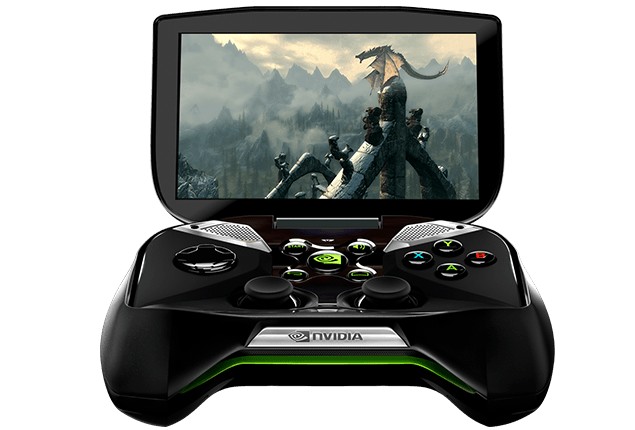
Nvidia’s announcement of Project SHIELD during CES 2013 came out of left field. It was truly unexpected but it is nice to see a company willing to push the envelope and try something different. Project SHIELD is more than just a handheld gaming system for Nvidia; it is a way to showcase exactly what gaming can be with Nvidia’s Tegra 4 and other chipsets. Nvidia has been hosting PC Mondays & Android Thursdays to show off Project SHIELD in action. Here's a look at what they've shown off so far
Depending on your computer setup, you can play games through Steam, games installed on your computer, or Android games from Google Play. From the demos, it appears that you will need a GeForce GTX-enabled PC with GFE (GeForce Experience) to have the best experience with Project SHIELD.
If you are a Steam user then this next part is for you. Nvidia announced and demoed Steam support on Project SHIELD. So long as there's an in-game option to use a control pad rather than a mouse, all the games you have purchased on Steam can be played on Project SHIELD. The idea alone sounds pretty cool but actually seeing it in action is even better. Nvidia is really showing the gaming potential on an Android device with the SHIELD application.

FEATURES -

Custom 72-core NVIDIA GeForce® GPU
Quad-core A15 CPU

5-inch 720p retinal multi-touch display for high fidelity visuals

Custom, bass-reflex, tuned port audio system delivers fidelity and custom range never before experienced on a portable device

802.11n 2x2 MIMO game-speed Wi-Fi provides high-bandwidth, ultra-fast wireless for seamless game streaming

Project SHIELD is stocked with the latest Android Jelly Bean operating system from Google, providing access to all your favorite Android applications and games

Project Shield is powered by Tegra 4, Nvidia’s freshly unveiled quad-core Cortex A15 chip. All the details on Tegra 4
The amounts of RAM and storage have not been announced yet. We assume that the device features 2GB of RAM. Users will be able to expand storage using a microSD slot. Ports include a USB port, a standard audio jack, and HDMI output.
Apparently, the device will support LTE, although at this point the beta version we were shown only supports WiFi.

Battery

The Shield comes with built-in Li-Ion batteries rated at 38Whr. Nvidia says that playing PC games on the Shield (see below) will not require that much battery juice, because all the hard work is done by the PC. The Tegra 4 chip is said to be more power efficient than the Tegra 3, which could also contribute to an extensive battery life for the Shield.
Nvidia promises between 5 and 10 hours of gaming for the Shield and up to 24 hours of HD video playback. We have to wonder about the weight of the device, considering how quickly a 3D game can munch through a regular smartphone battery. To achieve 5 to 10 hours of gaming, Nvidia must have fitted the Shield with some extra-large batteries.

Controller

Nvidia calls the controller on the Shield “console-grade”, and from the looks of it, the device delivers on the promise. At first glance, you could even mistake the Shield for a PS3 DualShock 3 controller.
The Shield controller buttons and sticks:
  • 2 joysticks
  • a D-pad
  • ABXY buttons
  • left/right bumpers
  • left/right analog triggers
  • Start/Back/Home/Volume buttons
  • a multi-function NVIDIA/Power button

Stock Android 4.2 Jelly Bean and ecosystem

The Project Shield runs stock Android 4.2. Kudos to Nvidia for acknowledging that the latest iteration of Android is a great operating system with a great interface, that doesn’t require tweaking and skinning just for the sake of it.
Because Shield runs stock Android, users will have access to all the 600,000+ apps in the Play Store, all the Google services, and all the media content (music, movies, and books) in Google’s store.
Nvidia revealed that Android games optimized for Project Shield would be made available in the TegraZone portal. These include so far:
  • Arma Tactics
  • Blood Sword
  • Burn Zombie Burn
  • Dead Trigger 2
  • Real Boxing
  • Rochard

PC requirements

According to Nvidia, the following specs are required to stream PC games on the Shield:
  • GPU: NVIDIA® Kepler™-based GeForce GTX 650 (Desktop) or GTX 660M (Notebook) or higher
  • CPU: Intel Core i5 or equivalent or higher
  • System Memory: 4 GB or higher
  • Software: GeForce Experience™ application and latest GeForce drivers
  • OS: Windows 7 or higher
  • Router: Router: 802.11a/g/n (Recommended: 802.11n Dual Band / MIMO Router)


SOURCE - NVIDEA


Friday, February 15

www.tabncell.com


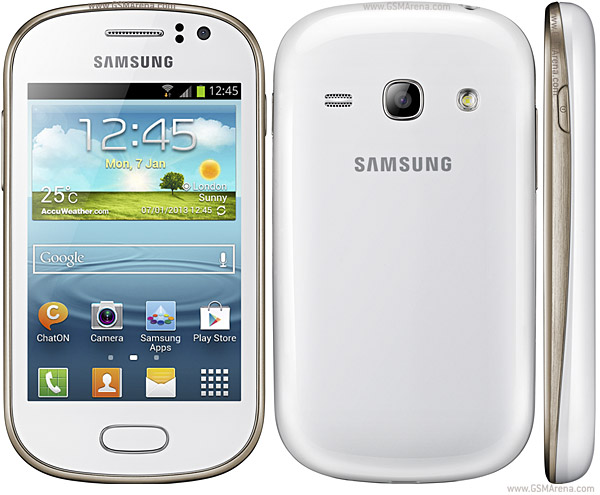
Samsung Galaxy Fame Is A Entry Level Android Smartphone.
It offers hardware specs that can't get much more modest than that: a 3.5-inch 320 by 480 pixel display, 1GHz single-core processor, 5MP camera, and 4GB of storage. But the smartphone runs Android 4.1 Jelly Bean and has access to the huge apps collection offered by Google's ecosystem, so despite its low-end nature, there's quite a lot one can do with it.

SPECIFICATIONS -
General 2G Network GSM 850 / 900 / 1800 / 1900 - GT-S6810
  GSM 850 / 900 / 1800 / 1900 - GT-S6812 (SIM 1 & SIM 2)
3G Network HSDPA 900 / 2100
SIM Optional Dual SIM (Mini-SIM)
Announced 2013, February
Status Coming soon. Exp. release 2013, Q1
Body Dimensions 113.2 x 61.6 x 11.6 mm (4.46 x 2.43 x 0.46 in)
Weight 120.6 g (4.23 oz)
Display Type TFT capacitive touchscreen, 256K colors
Size 320 x 480 pixels, 3.5 inches (~165 ppi pixel density)
Multitouch Yes
Sound Alert types Vibration; MP3, WAV ringtones
Loudspeaker Yes
3.5mm jack Yes
Memory Card slot microSD, up to 64 GB
Internal 4 GB, 512 MB RAM
Data GPRS Yes
EDGE Yes
Speed HSDPA, 7.2 Mbps; HSUPA, 5.76 Mbps
WLAN Wi-Fi 802.11 b/g/n, Wi-Fi hotspot
Bluetooth Yes, v4.0 with A2DP
NFC Yes (S6810P model only)
USB Yes, microUSB v2.0
Camera Primary 5 MP, 2592х1944 pixels, autofocus, LED flash
Features Geo-tagging, touch focus, face detection
Video Yes, VGA@25fps
Secondary Yes, VGA
Features OS Android OS, v4.1.2 (Jelly Bean)
CPU 1 GHz
Sensors Accelerometer, proximity, compass
Messaging SMS(threaded view), MMS, Email, Push Mail, IM, RSS
Browser HTML
Radio Stereo FM radio with RDS, FM recording
GPS Yes, with A-GPS support and GLONASS
Java Yes, via Java MIDP emulator
Colors White
 - SNS integration
- MP4/WMV/H.264/H.263 player
- MP3/WAV/eAAC+/FLAC player
- Organizer
- Image/video editor
- Document viewer
- Google Search, Maps, Gmail,
YouTube, Calendar, Google Talk, Picasa
- Voice memo/dial
- Predictive text input
Battery   Li-Ion 1300 mAh battery  


source-gsmarena


 SAMSUNG GALAXY REVERB

Wednesday, February 13

Spice Stellar Pad Mi-1010 is a tablet with 10.10 inch IPS LCD display with a resolution of 1280 x 800 px. Powered by Android Jelly Bean 4.1 operating system, the tablet comes equipped with a 1.5GHz dual-core processor, 1GB RAM and quad-core GPU. The device houses a 3MP primary and VGA secondary camera. Other features are 7600 mAh battery, 3D G-sensor, 16GB internal memory, and 64GB expandable memory.

 PROCESSOR
  • Processor type
  • Dual Core
  • Processor speed
  • 1.5GHz
  • Quad core GPU

DISPLAY

  • IPS LCD
  • 10.10 inch
  • 1280 x 800 px
CAMERA
  • Resolution
  • 3 megapixels
  • Image formats
  • JPEG
  • Number of cameras
  • 2
  • Secondary camera
  • 0.3MP
  • Additional camera features
  • Digital zoom
  • Video recording
STORAGE

  • Built-in storage type
  • Flash
  • Built-in
  • 16 GB
  • 0.98GB available for apps
  • 13.16GB available for multimedia
  • RAM
  • 1 GB
  • Expansion type
  • MicroSD card
  • Expansion capacity
  • 64 GB
OTHERS
  • 3G
  • Via 3G dongles
  • Wi-Fi
  • Wi-Fi 802.11 b/g/n
  • USB
  • HDMI Port
  • Battery type
  • Li-Po 7600 mAh battery
  • Power adaptor
  • Proprietary
  • Charger connector pin
  • Proprietary
  • Usage time
  • Not available
SOURCE-http://www.saholic.com/tablets/spice-stellar-pad-mi-1010-1005572


OS & Processor

The Z10 by BlackBerry is the first device to feature the BlackBerry 10 OS. It comes with a 1.5 GHz dual core processor loaded in it. The 2 GB RAM of this smartphone is on par with the top range smartphones.

Hardware

BlackBerry Z10 has undergone a complete changeover compared to the previous models in the brand's lineup. This is a full touchscreen phone featuring a 4.2-inch display screen with 1280 x 768 pixel resolution. This handset measures only 9 mm in thickness. The 1800 mAh battery loaded in this smartphone offers up to 10 hours of talk time and 316 hours of standby time.

Camera & Memory

The 8 MP primary camera loaded in the BlackBerry Z10 helps in capturing images in impressive quality. Features like LED flash, image stabilization, auto focus, and face detection etc. helps in enhancing the quality of pictures. This smartphone also packs a 2 MP secondary camera. The Z10 comes with 16 GB internal memory storage and 64 GB expandable memory option.

Media & Connectivity

There are multimedia features like media players, social networking apps, games and FM radio etc. available in the BlackBerry Z10. Users can connect to the internet using multiple platforms including 4G LTE, 3G and WiFi etc.

 www.tabncell.com

Gallery

1

Most Commented

Contact Form

Name

Email *

Message *

2014 © Planer - Responsive Blogger Magazine Theme - Published By Gooyaabi Templates
Planer theme by Way2themes